
A small idea. A clear shape.
See an idea
take shape.
Make a point, rehearse an opening or build a story. Choose one to try. Every exercise also works through its written prompts.
Original fictional example. No real class or learner is shown.
Read at your own pace
Point. Example. Check.
Original fictional example. No real class or learner is shown.
- 01 / Point
Let’s meet in the library.
Say the idea you want the listener to understand.
- 02 / Example
Yesterday, it was quiet after lunch.
Make your meaning concrete with one specific detail.
- 03 / Check
Would that work for you?
Give the listener room to respond or ask a question.
Imagine the room
Before the first word.
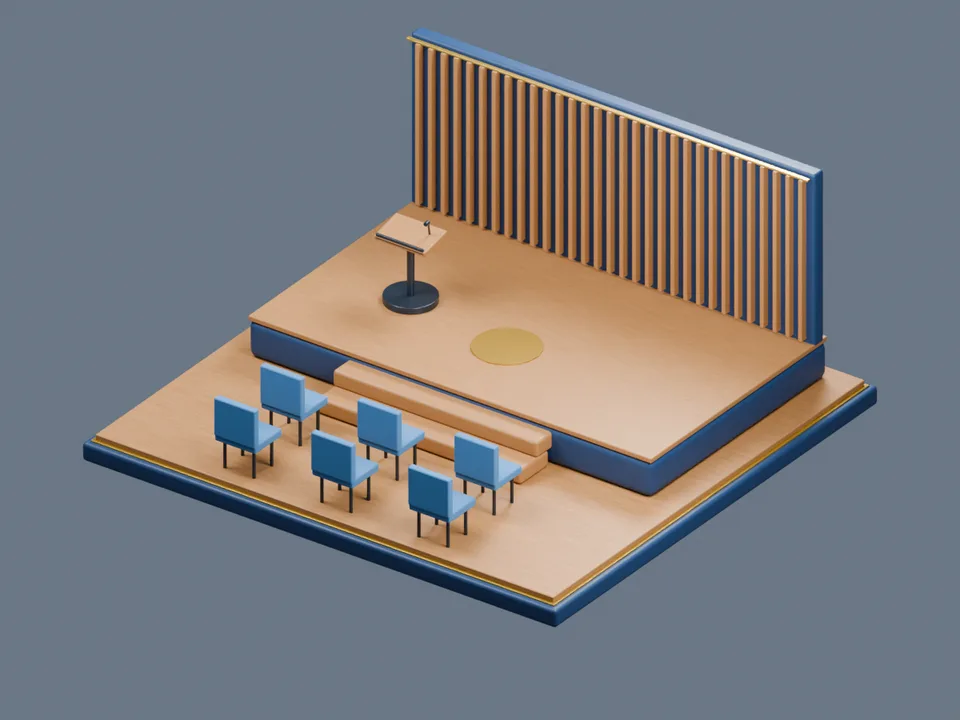
Use this imagined room to rehearse an opening. You can practice seated or standing, in a space that works for you.
01 / Choose your position
Imagine speaking from the gold mark. Choose a comfortable position where a listener can see or hear you. Adapt the position to your access needs.
02 / Give the listener your attention
Choose one chair as your listener. Say a short opening sentence toward that person. Comfortable orientation matters more than holding eye contact.
03 / Pause, listen, try once more
Pause before your first word. Ask a practice partner which words were easiest to hear. Choose one small adjustment, then repeat the opening once.
01 / Choose your position
Imagine speaking from the gold mark. Choose a comfortable position where a listener can see or hear you. Adapt the position to your access needs.
02 / Give the listener your attention
Choose one chair as your listener. Say a short opening sentence toward that person. Comfortable orientation matters more than holding eye contact.
03 / Pause, listen, try once more
Pause before your first word. Ask a practice partner which words were easiest to hear. Choose one small adjustment, then repeat the opening once.
The gold mark is a visual prompt. A real room needs its own sound and access checks.
A picture. More than one possibility.
Notice first. Then imagine.
Look closely, or use the description below. Build a short story while keeping what you see separate from what you invent.
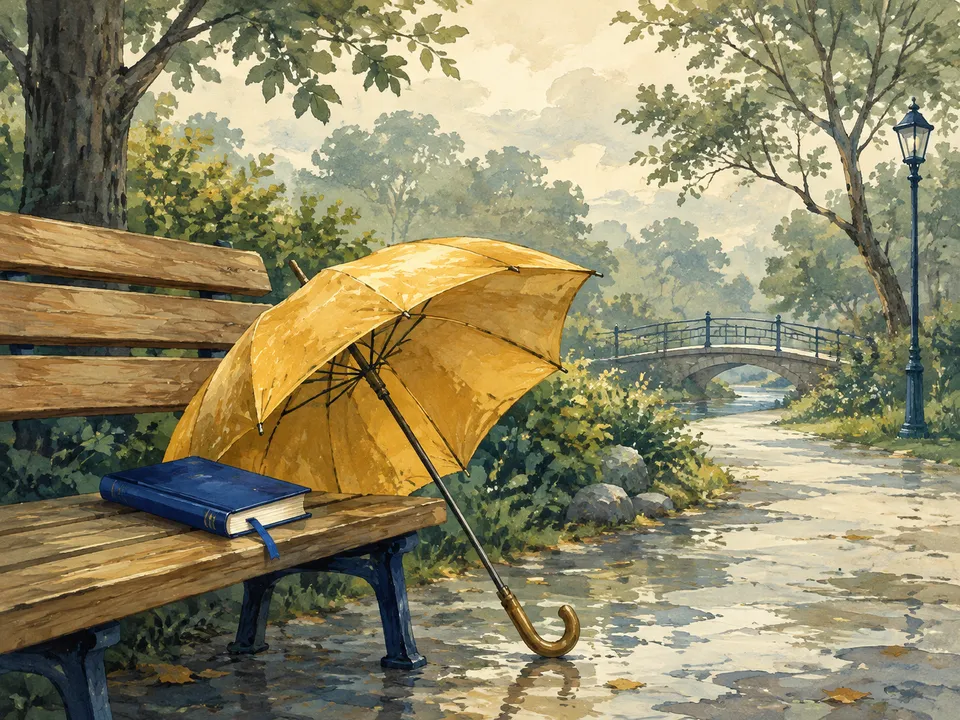
Scene description: A closed blue book rests on a wooden bench beside an open yellow umbrella. Trees, a wet path and a small bridge fill the background. No people are shown.
01 / Observe
Name two details you can see. Start with “I can see…” and stay with the picture.
02 / Imagine
What might have happened? Use “might”, “could” or “perhaps” to make clear that it is your idea.
03 / Tell and listen
Add one sentence about what could happen next. Ask a listener which detail made them curious. Try a different next sentence.
See one possible opening
I can see a blue book on the bench. Perhaps someone left it for the next visitor. What message might be inside?
Only the first sentence describes a visible detail. The rest is an invented possibility. Your story can be different.
One possible opening
I can see a blue book on the bench. Perhaps someone left it for the next visitor. What message might be inside?
Only the first sentence describes a visible detail. The rest is an invented possibility. Your story can be different.
Your turn to make it real.
Choose an everyday suggestion. Say the point, add a true detail and ask a question. Listen to the answer before trying again.
Choose a complete practice ↗One sentence. One adjustment.
My sentence:
What my listener noticed, and what I will try next:
SpeakKai · https://speakkai.com/watch/